 English
 العربية





About the Department
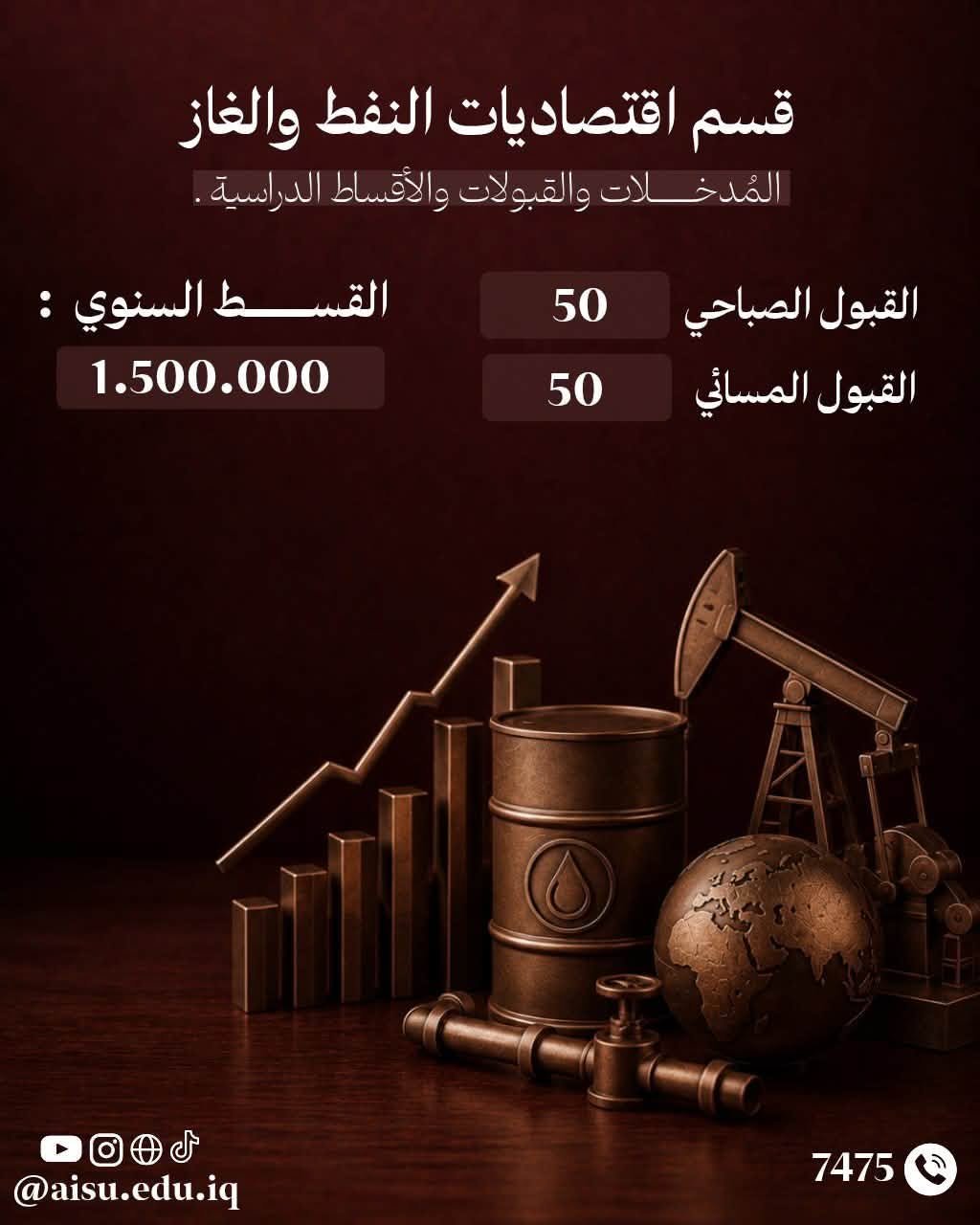
The Department of Oil and Gas Economics is an academic and applied field that focuses on the economic aspects of the energy sector, with a particular emphasis on oil and natural gas. The department covers market analysis, investment strategies, resource management, as well as environmental challenges and government policies affecting the sector. The department aims to equip students with the knowledge and skills necessary to understand and analyze the economic dynamics of the oil and gas industry.
Strategic Objectives
Provide Outstanding Education: To offer comprehensive and up-to-date educational programs in oil and gas economics, focusing on providing a deep understanding of economic concepts and advanced technologies in the sector.
Encourage Scientific Research:
To support research on economic issues related to the sector, including strategic analysis, risk management, new technologies, and environmental policies.
Develop Practical Skills:
To equip students with the practical skills necessary for market analysis, project evaluation, and resource management in the oil and gas industry.
Foster Collaboration with Industry: To build partnerships with companies and institutions in the energy sector to provide training and professional development opportunities, and to ensure the application of academic knowledge in real-world work environments.
Guide Policy and Strategy:
To provide consultations and analyses aimed at supporting strategic decision-making and public policy related to the oil and gas sector.
Support Sustainable Development:
To focus on developing strategies and solutions that aim to balance economic growth with environmental protection, and to promote sustainability in the energy sector.
Main Course Areas:
The department's curriculum covers vital areas including:
Oil and Gas Economics:
The study of energy markets Oil and gas pricing mechanisms and supply and demand analysis.
Microeconomics and macroeconomics of energy: Understanding the impact of the energy sector on the local and global economy.
Energy finance and investment:
Analyzing oil projects and evaluating their economic and investment feasibility.
Natural resource management:
Studying methods for the sustainable exploitation of oil and gas resources.
Oil and energy policies:
Analyzing governmental and international policies related to energy production and export.
International energy trade:
Studying the movement of oil and gas exports and imports and global markets.
Technology in the energy sector: Identifying modern technologies in oil and gas extraction and production.
Environment and energy:
Studying the environmental impacts of the oil and gas industry and ways to mitigate them.
Career opportunities for graduates:
- Working in government institutions and the oil sector, where they manage and control oil and gas production.
- Working in oil companies, overseeing exploration and extraction operations.
- Graduates of this department work as specialists capable of studying and understanding the impact of risk management in the oil and gas industry. A market analyst monitoring global oil and gas prices and their fluctuations.
- Students learn how to best utilize these resources to achieve a strong and robust economy.
- Students gain introductory knowledge of how oil and gas are produced and study the environmental costs associated with their production.
- They work as oil and gas economists, conducting research to develop new policies for managing oil reserves.
- The study of alternative (clean) energy is also included in this section, focusing on converting oil and gas energy supplies into clean energy.
Why choose oil and gas economics?
Oil and gas economics is a vital specialization that combines economics and the energy sector. It provides students with a deep understanding of oil and gas markets and the analysis of related economic policies. It also opens doors to excellent career opportunities in oil companies and government institutions, and provides analytical skills that aid in making strategic decisions in one of the world's most important economic sectors.
Academic Description